 14 July 2026
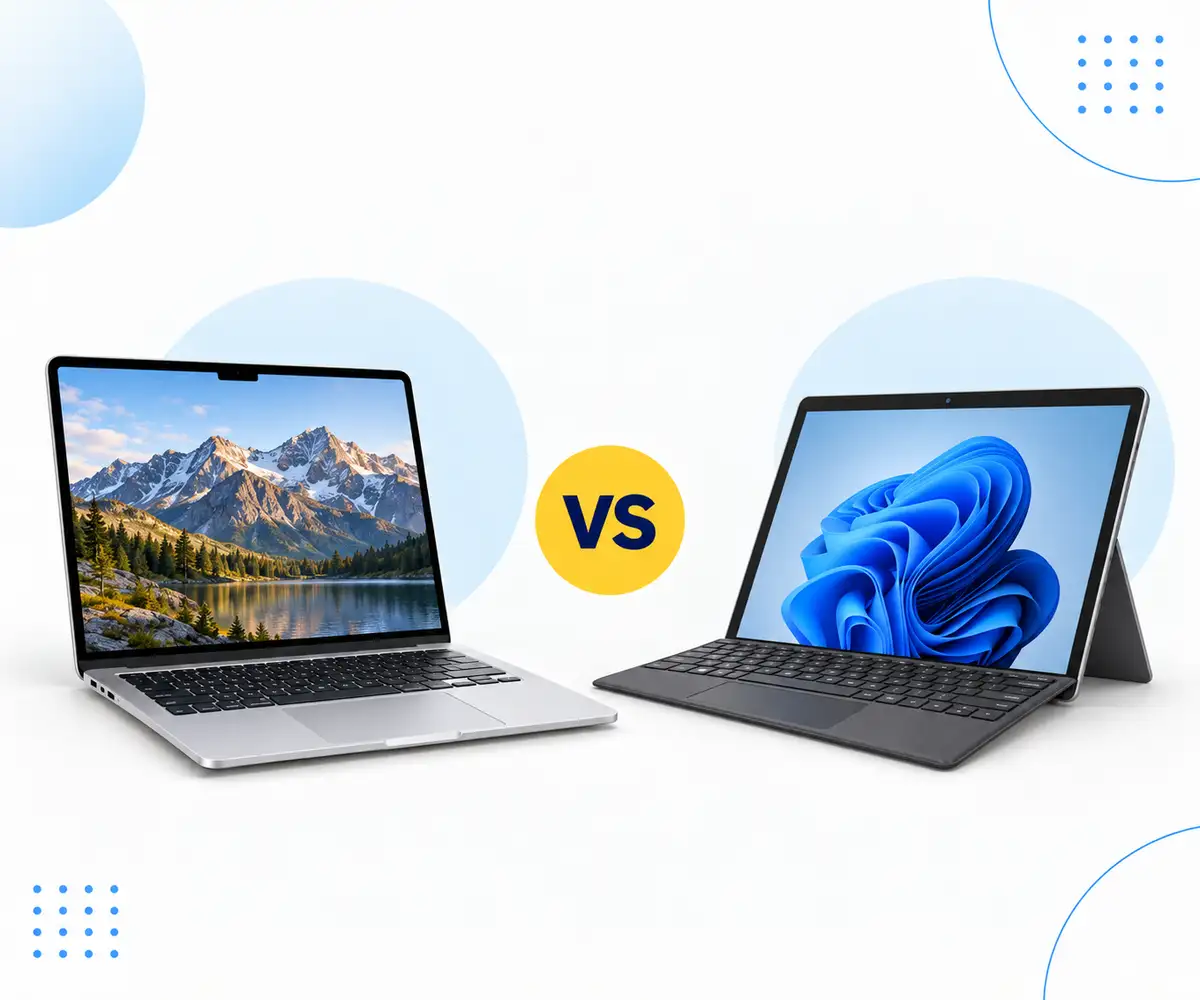
MacBook vs Surface Pro
Compare MacBook and Surface Pro performance, displays and flexibility to find the right refurbished device for the way you work.
Read Guide →

Date Posted: 26 February 2024
.jpg)
In the ever-evolving world of gaming, selecting the right gaming laptop is essential for that immersive, exhilarating experience. But, with so many different options flooding the market, and with each claiming to be better than the last, finding the perfect balance between performance and value is key to unlocking your gaming potential.
Here, we're going to take an in-depth look at the intricacies of choosing the ultimate gaming laptop that not only meets your gaming demands but delivers exceptional value. Whether you're a casual player or a competitive gamer, you'll find everything you need to know about selecting your gaming laptop in this ultimate guide.
.jpg)
First things first. Let's discuss what a gaming laptop actually is and how it differs from the kind of laptop you might work from.
Put simply, a gaming laptop is specially designed to handle the requirements of demanding games and, unlike regular laptops, is engineered to deliver high-performance computing power and graphics capabilities to run graphically intensive games smoothly and efficiently.
So, we know that gaming laptops are designed for gaming. No real surprises there. But how do they differ from regular laptops? It mostly comes down to what's inside, and gaming laptops feature high-performance components that are capable of handling demanding games in a way that regular laptops can't.
Here are some of the key features you'll find in a gaming laptop that allows it to deliver such powerful performance:
Gaming laptops are equipped with a dedicated graphics card (GPUs), which are designed to render complex 3D graphics in real-time, ensuring smooth gameplay and immersive value. NVIDIA and AMD are considered among the best for delivering outstanding GPU performance, and these are commonly found in the most powerful gaming laptops.
To handle the computational demands of modern games, gaming laptops feature high-performance central processing units (CPUs) with multiple cores and threads. These processors ensure smooth gameplay and faster load times, and allow for efficient multitasking while gaming.
All laptops have a set amount of random access memory (RAM), but gaming laptops tend to have more generous amounts of RAM to facilitate smooth multitasking and fast data access during gaming sessions. This higher amount of RAM also improves overall system performance, so you can rest assured that your gaming laptop will continue offering powerful performance for a long time.
Another difference between gaming laptops and regular laptops is that gaming laptops often feature higher refresh rate displays, typically 120Hz, 144Hz, or higher. This helps to deliver smoother motion throughout gameplay and reduces motion blur, resulting in a more responsive and immersive gaming experience, particularly in fast-paced action games.
Gaming laptops are also equipped with enhanced cooling systems that are made up of multiple fans, heat sinks, and heat pipes, all of which work together to effectively dissipate the heat generated by the laptop's other powerful components during intense gaming sessions. This, in turn, ensures optimal performance and prevents throttling, which can degrade gaming performance over time.
Another difference between gaming laptops and regular laptops is their design. Gaming laptops often sport aggressive designs with customisable RGB lighting, dedicated gaming keys, and specialised software utilities, such as overclocking tools and game-specific profiles.
Much like most tech, there is a long-running debate over whether gaming laptops or gaming PCs are better. The answer isn't that simple, and each has its advantages and drawbacks, and the option that's best for you will ultimately depend on your preferences and priorities.
A gaming PC will generally offer more customisable options, higher performance potential, easier upgradability, and better cooling systems compared to gaming laptops, and this is simply because of their size. They also tend to provide better value for money in terms of performance per dollar.
Gaming laptops, on the other hand, offer portability and convenience, allowing you to play games on the go rather than being confined to a stationary set-up.
.jpg)
When it comes to purchasing a gaming laptop, there are various things you need to consider to ensure you get the best gaming experience for your needs and your budget. From performance and display quality to portability, here's a detailed list of key factors to keep in mind before making your decision.
One of the most important things you need to consider is the overall performance of the gaming laptop, including the CPU and graphics card's VRAM. To get the best performance possible, opt for a gaming laptop with multiple cores and threads, such as an Intel Core i9 or AMD Ryzen 7, both of which are well-known for producing smooth gameplay and multitasking.
When it comes to the dedicated graphics card (GPU), choose a model from a reputable manufacturer, NVIDIA or AMD, that have ample VRAM to ensure smooth rendering of high-resolution graphics in modern games.
Be sure to pay attention to the display quality and features of the gaming laptop you're thinking of buying, too. Look for a high-resolution display (ideally Full HD or higher) that will produce crisp visuals, and also consider a high refresh rate display of 144Hz or higher for smoother motion and reduced blur during gameplay.
It's also a good idea to look for extra display features, such as adaptive sync technology like NVIDIA G-SYNC or AMD FreeSync, as these will minimise screen tearing and stuttering, resulting in a more immersive gaming experience.
You also need to think about the amount of storage space available in your chosen gaming laptop. It's best to choose a model with a combination of fast solid-state drive (SSD) storage for quick boost times and game loading, along with additional storage capacity for storing a large game library and multimedia files (such as HDD).
Some gaming laptops feature dual storage configurations or expandable storage options, too, and these offer more flexibility in managing storage.
A good gaming laptop will also have an effective cooling system that stops its components from overheating during intensive gameplay. To ensure you get this, look for a gaming laptop with multiple fans, heat pipes, and large exhaust vents, as these will prevent thermal throttling and maintain a consistent performance across a long gaming session.
You can also ensure further cooling efficiency by looking for features like fan control software or dedicated cooling modes, which will allow you to customise the cooling performance based on your gaming preferences and workload.
When looking at a gaming laptop, you should also take some time to examine the build quality and durability, as this is a good way to measure its long-term reliability. Look for sturdy construction, premium materials, and reinforced hinges that can withstand the rigours of regular use.
It's also important to look at the build quality of individual elements on a gaming laptop, such as keyboard durability, trackpad materials, and port design.
It's also important to look at the available connectivity options and ports on a gaming laptop, ensuring that it has a sufficient number of USB ports (including USB Type-C for modern attachments) and HDMI or DisplayPort connections for external monitor connectivity.
You should also look for ethernet ports that will allow wired networking and audio jacks for connecting headphones or external speakers. Additionally, you might want to consider features like Wi-Fi 6 compatibility for faster wireless connection and Bluetooth support for connecting peripherals.
One of the biggest selling points of gaming laptops is that they are super portable, especially compared to a gaming PC. However, to make sure you get the best portable performance, consider factors such as weight, thickness, and battery life.
While a gaming laptop will generally be heavier and bulkier than a standard laptop, you still need to find that perfect balance between performance and portability. A manageable weight and a decent battery life will help you achieve this.
Every gamer has their own budget, so be sure to consider the price-to-performance ratio when you're buying a gaming laptop. Don't be scared to compare different models based on their specifications, features, and price points to find the best gaming laptop for your budget without sacrificing performance.
It's also a very good idea to look for any bundled accessories, as this can help save you money in the long run. Likewise, a gaming laptop that comes with warranty coverage and after-sales support will give you more value for money and peace of mind that, should something go wrong, you're covered for a replacement.
.jpg)
As you enter the world of gaming laptops, you'll soon find that everyone has their own opinion on what you need. But for many people, especially the technophobic who aren't very well-versed in computer jargon, things can become very confusing very quickly.
To make things simple, we're going to break down how many CPU cores you need in a gaming PC in a way you can understand.
The first thing you need to know is that the number of CPU cores you need depends on several factors, including the types of games you play, your multitasking requirements, and future-proofing considerations.
While gaming primarily relies on the graphics card (GPU), the CPU plays a crucial role in overall gaming performance, especially when it comes to background processes.
Still confused? Let's make things even simpler. For most gaming laptops, a quad-core CPU with multi-threading totalling eight threads is considered enough for handling modern games and multitasking.
However, newer games are increasingly optimised to leverage more CPU cores and threads, which essentially means you'll need a gaming laptop with a higher number of core counts.
With the above in mind, recent gaming laptop models often feature CPUs with eight cores (such as the Intel Core i7-10870H or AMD Ryzen 7 5800H), which provide improved performance on multitasking scenarios and future-proofing for upcoming games.
Others, particularly those considered high end gaming laptops, offer CPUs with up to 10 or 12 cores, catering to gaming enthusiasts or content creators who demand maximum performance.
So, if you're a keen gamer, a gaming laptop with eight cores will give you what you need. But, if you're a professional gamer or create gaming content, it would be best to choose a high-end laptop with up to 12 cores.
.jpg)
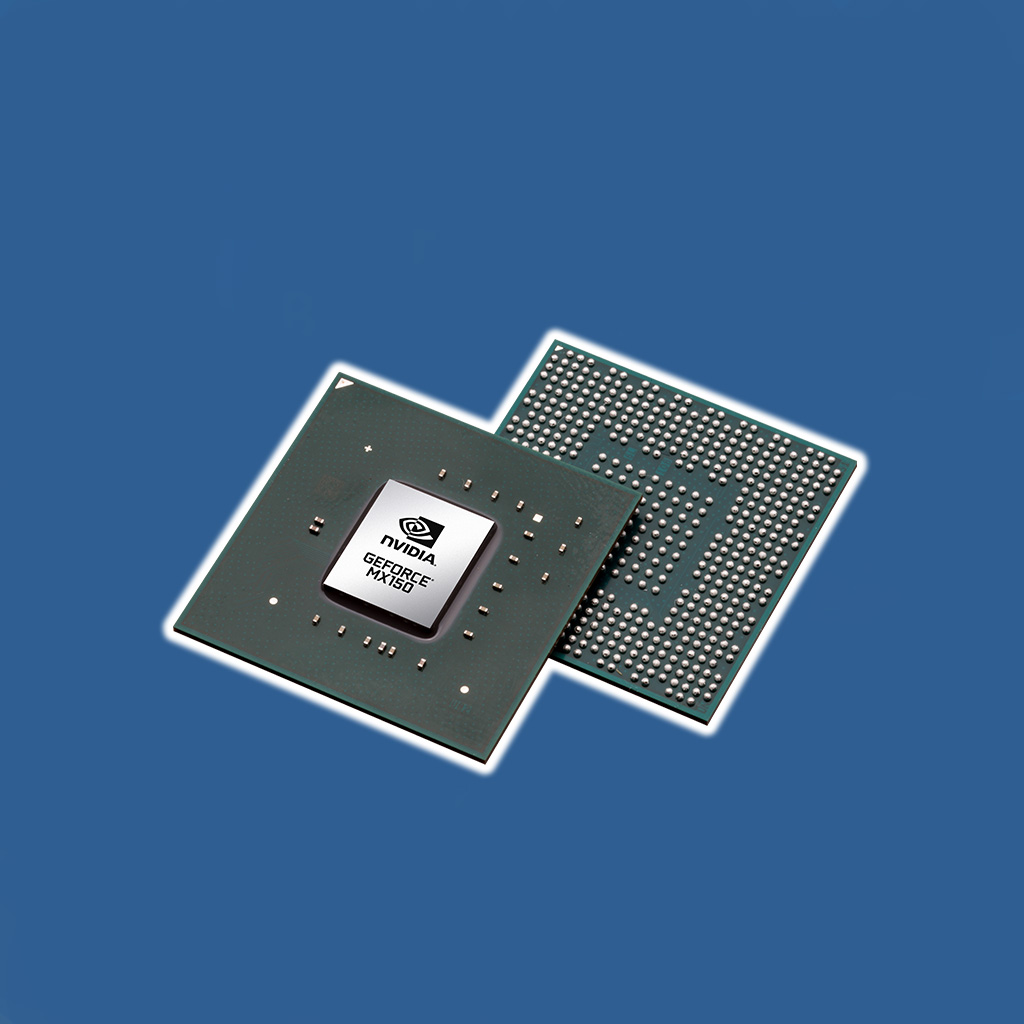
Another crucial component to look into when buying a gaming laptop is its Graphics Processing Unit (GPU), as this has the power to make or break the entire immersive experience. But how can you make sure you have the best GPU possible?
Firstly, a gaming laptop should be equipped with a dedicated graphics card from a reputable manufacturer, such as NVIDIA or AMD, as this will offer strong gaming performance and boast features like ray tracing and DLSS.
Some of the best GPUs on the market include the NVIDIA GeForce RTX Series and the AMD Radeon RX Series, each of which has ample VRAM for handling high-resolution textures and complex scenes and can ensure efficient thermal management to maintain optimal performance.
As you begin looking at GPUs, you'll find yourself faced with the decision of dedicated or integrated graphics. But what's the difference between them?
Dedicated graphics are discrete GPUs that are separate from the laptop's central processing unit (CPU), and they have their own dedicated memory and processing power specifically optimised for handling graphics-intensive tasks.
As such, they offer high performance that allows for smoother frame rates, higher resolutions, and better visual effects compared to integrated graphics solutions.
Integrated graphics, on the other hand, are, as their name suggests, GPUs that are integrated directly into the laptop's CPU. This means that they share memory and resources with the CPU rather than having their own dedicated memory and processing power.
You're more likely to find integrated graphics in budget-friendly laptops, and while they are suitable for light gaming, they don't have the same power needed for demanding gaming sessions.
.jpg)
For both gaming and future-proofing, your chosen gaming laptop should ideally have 16GB of RAM. This amount of RAM is considered the sweet spot for gaming, as it provides enough memory for smooth gameplay in most modern titles and allows for effective multitasking without performance bottlenecks.
With 16GB of RAM, you can run demanding games, multimedia applications, and background processes simultaneously without risking significant slowdowns or performance issues. You're also offered sufficient headroom for future game releases with 16GB of RAM, which may require more memory as game graphics and system requirements continue to advance.
Quite simply, this isn't really an area you should cheap out on. While some gaming laptops may come with 8GB of RAM, choosing a model with 16GB of RAM ensures better overall performance and accommodates evolving gaming demands.
.jpg)
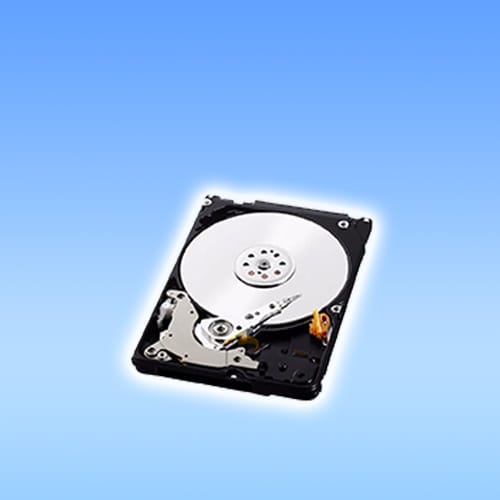
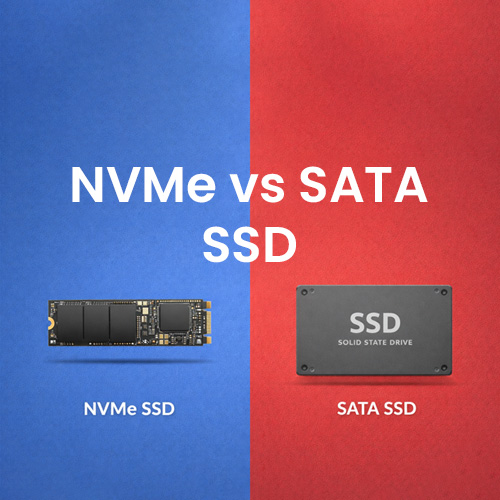
The amount of storage you need in a gaming laptop will ultimately depend on your specific usage requirements and preferences. However, for most gamers, a combination of Solid-State Drive (SSD) storage and additional Hard Disk Drive (HDD) storage is recommended for optimal performance and storage capacity.
A gaming laptop should have an SSD with a capacity of at least 512GB or higher for fast system performance and game loading times. If possible, we recommend as well that a secondary HDD is installed, with a minimum of 1TB storage capacity. This will offer additional storage space for larger game libraries and multimedia files, as well as improve efficiency on speed and performance - something any serious gamer needs.
Both Solid-State Drives (SSDs) and Hard Disk Drives (HDDs) are storage devices commonly used in gaming laptops, and an SSD uses flash memory to store data, while an HDD uses spinning magnetic disks with read/write heads.
The main difference between the two lies in their speed, durability, and price. SSDs offer significantly faster read and write speeds, resulting in quicker boot times, faster application loading, and improved overall system responsiveness compared to HDDs.
SSDs are also more resistant to physical shock and have no moving parts, making them more durable and reliable for portable devices like gaming laptops.
However, SSDs are more expensive per gigabyte compared to HDDs, which means they offer less storage capacity for the same price. HDDs, on the other hand, provide a larger storage capacity at a lower cost, making them suitable for storing large amounts of data at a more affordable price.
.jpg)
Higher refresh rates offer smoother motion and reduce motion blur, which creates more of an immersive gaming experience. But higher refresh rates also require more powerful hardware in order to consistently achieve high frame rates in games.
So, what should you go for?
For most gamers, a gaming laptop with a refresh rate of 144Hz is considered a good balance between smooth gameplay and affordability and will provide noticeably smoother motion compared to a standard 60Hz display.
However, for competitive gamers or enthusiasts seeking the ultimate gaming experience, gaming laptops with refresh rates of 240Hz or 300Hz are often the best choice. These higher refresh rates will offer even smoother motion and reduced input lag, providing a competitive edge in fast-paced multiplayer games.
.jpg)
A gaming laptop should have a high-quality display that enhances your gaming experience with vibrant colours, smooth motion, and minimal input lag. Of course, to achieve this, there are certain specifications you need to keep in mind.
The first of these is screen size. Gaming laptops typically come in 14-inch, 15.6-inch, and 17.3-inch display sizes, and each of these has its own pros and cons, which we'll discuss below:
The main benefit of a 14-inch screen size is that you're offered better portability and the smaller size means the entire laptop will be lightweight, compact, and perfect for gaming on the go.
The drawback, however, is that smaller displays result in reduced screen real estate, which can ultimately impact immersion and visual detail in games. Likewise, text and UI elements may appear smaller.
A 15.6-inch display strikes a balance between portability and immersion, offering a good compromise for gamers who want a relatively compact laptop without sacrificing too much screen real estate.
However, some gamers may still find that this smaller screen slightly limits super-immersive gaming experiences, especially when compared to larger displays. The text will be more readable than on a smaller display but may still appear less crisp.
With a 17.3-inch laptop screen, you're offered a larger viewing area with enhanced detail and visibility, which is particularly good for games with expansive environments or intricate graphics. Likewise, this larger screen allows for better multitasking and productivity.
The main disadvantage of a 17.3-inch screen is that it increases the overall size and weight of the laptop, making it less portable and better suited for stationary use. The larger screen also tends to use more battery life than laptops with smaller screens.
You also need to consider the gaming laptop's display resolution, as this will significantly impact the experience by determining the level of detail and clarity in visuals.
Generally speaking, higher resolutions, such as 1080p Full HD or 1440p QHD, offer sharper images and more detailed textures, enhancing immersion and visual fidelity. However, there is a cost, and higher resolutions require more powerful hardware to maintain smooth performance.
For most gamers, a resolution of 1080p strikes a balance between visual quality and performance, providing crisp visuals without overly taxing the hardware.
Another important aspect to look at when considering display is panel type, and you'll generally have three to choose from: IPS, TN, and OLED. But what is the difference between these?
In-Plane Switching (IPS) displays offer superior colour accuracy, wide viewing angles, and excellent colour reproduction compared to Twisted Nematic (TN) panels. This makes them ideal for both gaming and content creation, but they do tend to have slower response times, which can result in motion blur during fast-paced games.
Conversely, TN panels are known for their fast response times, making them suitable for competitive gaming where fast-paced motion is essential. They also provide smoother gameplay than IPS panels, thanks to higher refresh rates and lower input lag, but their colour reproduction performance is inferior.
Organic Light Emitting Diode (OLED) panels take the best of both IPS and TNs panels, and offer excellent colour reproduction, fast response times, and unparalleled contrast ratios. As you might expect, however, OLED panels come with a much higher price tag.
.jpg)
Both the keyboard and trackpad are also important things to look at when deciding on which gaming laptop is best for your needs, and each has certain considerations.
When looking at the keyboard, think about whether mechanical or membrane is the best choice. Mechanical keyboards offer tactile feedback and durability, which is crucial for gamers who need to hit keys precisely and quickly. On the other hand, membrane keyboards are quieter and tend to be more affordable.
Gaming keyboards should also feature anti-ghosting and N-key rollover technology to prevent input conflicts and ensure accurate key presses, which is especially important during intense gaming sessions.
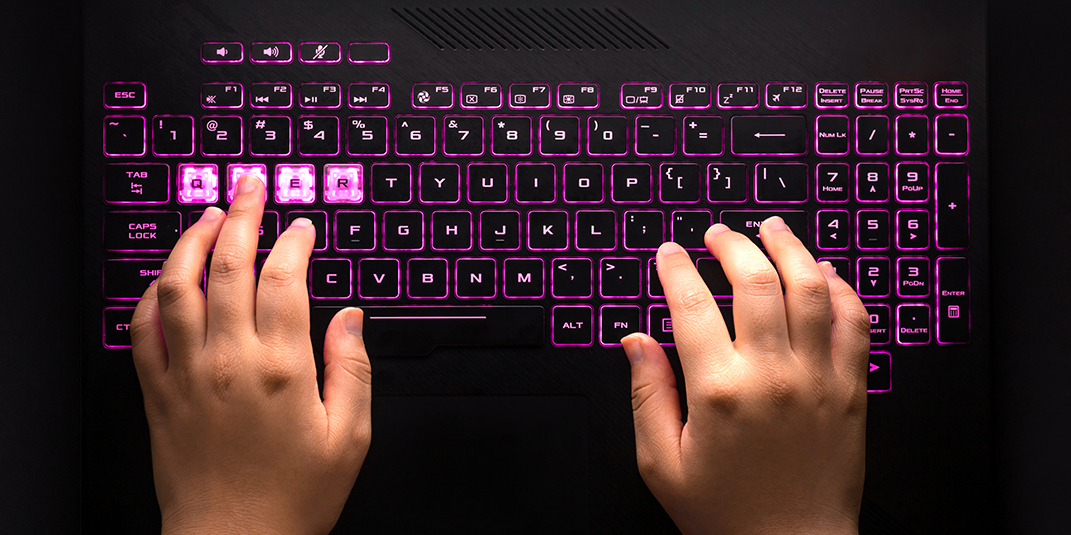
Also, think about backlighting. Backlit keyboards enhance visibility in low-light conditions and add a stylish aesthetic to the laptop. RGB backlighting also allows you to customise lighting effects in certain games, adding to the experience.
It is imperative that your trackpad is responsive and precise, as smooth cursor movement and accurate input can determine the outcome of your actions during a game. Your trackpad should also be adequately sized for your needs and be centrally positioned for comfortable navigation.
Some gaming laptops feature trackpads with additional gaming-centric features, such as customisable buttons or integrated touch-sensitive zones for gaming controls. These are particularly useful for professional gamers or enthusiasts playing games that require fast responses.
.jpg)
While it can be easy to get caught up in the different components inside your gaming laptop, it's equally as important to look at the overall build quality to ensure durability and longevity.
Look for a laptop with sturdy construction that has been built using premium materials like aluminium or magnesium alloy, both of which are well-known for their robustness. Take a look at the hinges on the laptop, too, making sure they feel reinforced and sturdy enough to withstand frequent use and travel.
Your chosen gaming laptop also needs to be light enough to transport comfortably and small enough to fit into a laptop bag without causing any damage. This is especially important for gamers on the move, travelling from place to place to take part in competitive events.
It's also very important that your gaming laptop contains an efficient cooling system, as this will help maintain optimal performance and prevent throttling during intense gaming. Look for a model that features multiple fans, heat pipes, and heat sinks that are strategically placed to dissipate heat from the CPU and GPU.
Or, if your budget allows, go for a gaming laptop with advanced cooling solutions, like vapour chambers and liquid metal thermal compounds, for improved heat dissipation.
All of the considerations we've detailed above are essential if you want to get the best gaming laptop for your needs. However, there are also a few other things you should think about to get the most out of your laptop and enhance your overall gaming experience.
Expectations with battery life vary, depending on factors such as hardware specifications, display settings, gaming workload, and, of course, battery capacity. Generally speaking, gaming laptops are not designed for extended gaming sessions on battery power as they have power-hungry GPUs and high-performance components.
You can typically expect a gaming laptop's battery life to reach 2-4 hours of moderate usage and light gaming. For intensive gaming, the battery life will be much shorter and can be as little as 1-2 hours.
No gaming experience is complete without a good sound behind it, so make sure you also consider sound quality when you're looking at your new gaming laptop. Look for a model with high quality speakers or audio systems, preferably with stereo or surround sound capabilities, as these will enhance gameplay with rich, detailed audio.
When you go to buy a gaming laptop, think about how easy it is going to be to upgrade certain elements, such as RAM and storage, is going to be. This also helps with future-proofing, as upgradable gaming laptops allow you to adapt to evolving gaming requirements, boosting performance and extending usability without the need to buy a new gaming laptop or overhaul the entire system.
.jpg)
Just like all tech, different gaming laptops come with different price tags, and it's important you consider your personal budget in line with your gaming experience.
Each of these laptops offers decent gaming performance at affordable prices, making them suitable options for entry-level gamers or those with a smaller budget:
Acer Nitro 5
Asus TUF Gaming A15
Lenovo Legion Y540
HP Pavilion Gaming Laptop
Dell G3 15 Gaming Laptop
MSI GF63 Thin
Acer Predator Helios 300
ASUS ROG Strix G
HP Omen 15
Lenovo IdeaPad Gaming 3
These laptops offer great gaming performance for more experienced gamers and those who have a slightly larger budget to work with:
ASUS ROG Zephyrus G14
Lenovo Legion 5
Dell G5 15
Gigabyte Aorus 5
Razer Blade 15 Base Model
Alienware m15 R4
These laptops offer powerful hardware configurations, high-quality displays, advanced cooling systems, and premium build quality, making them suitable choices for demanding gamers and enthusiasts with budgets for premium laptops:
ASUS ROG Zephyrus S GX701
MSI GS66 Stealth
Razer Blade 15 Advanced
Alienware m15 R5 Ryzen Edition
Acer Predator Triton 500
Lenovo Legion 7i
HP Omen X 2S
ASUS ROG Strix Scar 17
Dell Alienware Area-51m
While there isn't a single "best" gaming laptop brand, some of the most popular brands among gaming enthusiasts include ASUS, MSI, Razer, Acer Predator, and Gigabyte Aorus.
This ultimately depends on your individual preferences, budget, and specific gaming needs. However, some top contenders include the ASUS ROG Zephyrus Series, MSI GS66 Stealth, and Razer Blade 15.
Yes, gaming laptops are worth it for users who want to prioritise portability and gain the flexibility to game on the go. However, they are more expensive than their standard counterparts, but the investment is worth it for any serious gamer.
The prices of gaming laptops vary quite significantly depending on their components and the performance they offer. For those new to gaming, a budget gaming laptop may be the best choice, whereas experienced or professional gamers will benefit from more expensive gaming laptops.
Gaming laptops are designed specifically for gaming, so in terms of being "better", they certainly offer more features and better performance for playing games.
Yes, gaming laptops can be connected to external monitors using HMDI, DisplayPort, or other compatible ports.
14 July 2026
 2 July 2026
 29 June 2026
 4 June 2026
 30 March 2026
 19 February 2026
 2 February 2026
 6 January 2026
 29 December 2025

Thoroughly tested by qualified technicians

Most orders delivered within 3-7 business days

Our local team are here to help you

Industry leading warranty on all products
We're here to help! Click here to contact Customer Service


 Help Centre
 Contact Us